
Office Plants Dubai for Happier Workspaces
A reception desk with a single healthy plant feels more considered than one filled with brochures. A meeting room with greenery feels less stark during a long afternoon. That is the real appeal of office plants Dubai businesses can rely on: they make practical workspaces feel more welcoming without demanding a complete redesign.
The right plants do more than fill an empty corner. They bring color, soften hard lines, and give employees and visitors a small visual break from screens, glass, and office furniture. The key is choosing varieties that suit your actual workplace conditions, not just the look you want on delivery day.
Start With Your Office Conditions
Before choosing a plant, take a quick look at where it will live. Dubai offices can be bright near windows but surprisingly dim in interior work areas. Air conditioning also changes the environment, especially for plants placed directly beneath vents.
Light is the first question. A sunny window can support bolder statement plants, while a desk away from natural light needs a variety that is comfortable in lower light. If sunlight hits the plant through glass for several hours, keep delicate foliage a little back from the window to avoid scorched leaves.
Next, think about the care routine. An office with a dedicated facilities team may be able to support a larger collection with regular watering. A small team with a busy schedule is usually better off with a few forgiving plants in the right pots. A plant that needs frequent attention can quickly become an unwanted task rather than a welcome feature.
Also consider temperature and airflow. Most indoor plants prefer stable conditions. Avoid placing them directly in the path of strong AC, beside a frequently opened exterior door, or in a spot where hot afternoon sun reflects off nearby glass.
Best Office Plants for Dubai Workspaces
The best choice depends on light, available floor space, and how much care your team can realistically provide. These options are popular because they offer strong visual impact with manageable care needs.
Snake Plants for Busy Offices
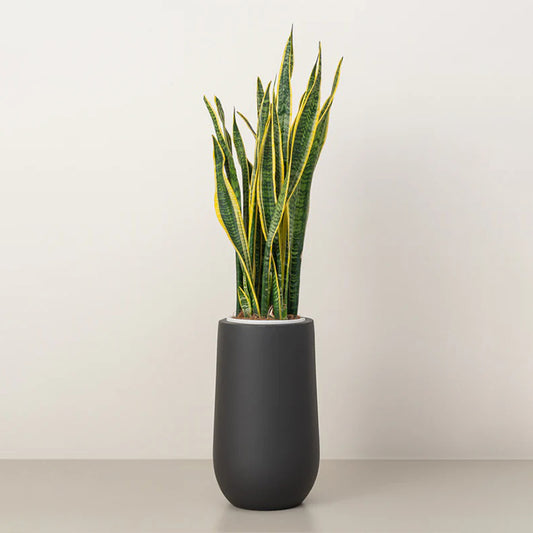
Snake plants are one of the most dependable choices for desks, reception areas, and meeting rooms. Their upright leaves have a clean, architectural look that works well with modern interiors. They tolerate lower light better than many houseplants and prefer their soil to dry between waterings.
Choose a compact snake plant for a desk or shelf. Use a taller variety in a floor planter to frame an entrance or fill a narrow corner. The main risk is overwatering, particularly in an air-conditioned office where soil may take longer to dry than expected.
Lucky Bamboo for Desks and Reception
Lucky bamboo is a simple way to add greenery where space is limited. It suits reception counters, shared desks, and meeting tables, and it has a neat, polished appearance without overwhelming the room.
Keep it in bright, indirect light rather than direct sun. If it is grown in water, refresh the water regularly and keep the roots covered. It is an easy option for offices that want a small green detail rather than a large planting plan.
Monstera for a Strong First Impression
For a lounge, client area, or open-plan office with good filtered light, a monstera creates an instant focal point. Its large split leaves bring a relaxed, premium feel to a space that might otherwise look overly formal.
Monsteras need more room than a small desk plant and appreciate a consistent watering routine. They are a better fit for an office that can give them a permanent spot near bright indirect light. Do not place one in a dark interior room and expect the same full, dramatic growth seen in bright spaces.
Bird of Paradise for Bright Corners
A bird of paradise is ideal when you want one plant to make a statement. Its tall stems and broad leaves suit spacious receptions, executive offices, and corners near bright windows. In the right location, it can make a neutral room feel warmer and more complete.
This is not the best pick for every office. It needs brighter light than snake plants or lucky bamboo, and its leaves can collect dust in busy urban spaces. Give it enough space to grow and wipe the leaves gently from time to time so it continues to look fresh.
Pothos and Trailing Plants for Shelves
Pothos works beautifully on shelves, cabinets, and high planters where its trailing vines can soften straight office lines. It is adaptable, easy to style, and suitable for areas with moderate to lower indirect light.
Because its vines can grow quickly, it may need an occasional trim. That small amount of maintenance is worth it when you want greenery to feel integrated into the room instead of simply placed in a corner.
Place Plants Where They Improve the Room
Office greenery looks most effective when it has a purpose. A tall plant can soften the edge of a glass partition. A pair of matching floor plants can give a reception desk more presence. Small plants on a meeting table can make the setting feel less rigid without blocking sightlines.
Try to avoid scattering small pots across every available surface. Too many unrelated plants can make a workspace look cluttered, especially in compact offices. Instead, repeat two or three plant types and choose planters with a consistent color or finish. This creates a calmer, more intentional look.
In shared work areas, keep plant placement practical. Do not put a large pot where it narrows a walkway, blocks a storage cabinet, or creates a tripping risk. For desks, select compact plants that leave enough room for monitors, paperwork, and daily tasks.
Planters matter as much as the plants themselves. A proper pot with drainage helps prevent root problems, while a saucer or waterproof outer planter protects office flooring and furniture. Neutral planters suit a clean corporate setting, while textured ceramic or woven finishes can add warmth to creative studios and casual workspaces.
A Simple Care Routine That Teams Can Follow
Office plant care does not need to be complicated, but it should be assigned to someone. When everyone assumes someone else will water the plants, they tend to be either neglected or watered too often.
A weekly check is usually enough for many low-maintenance varieties. Feel the top layer of soil before watering. If it is still damp, wait a few more days. Water thoroughly when needed, then let excess water drain away rather than allowing the pot to sit in it.
Every few weeks, rotate plants that receive light from one side so they grow more evenly. Wipe dust from broad leaves with a soft, damp cloth. This keeps the foliage looking good and lets the plant receive light more effectively. Remove yellow or damaged leaves as they appear.
Fertilizer can support growth during active growing periods, but more is not always better. A balanced plant fertilizer used according to its instructions is enough for most office plants. If a plant is in low light or growing slowly, reduce feeding rather than trying to force new growth.
Make Buying and Replacing Plants Easy
A good office plant plan should allow for real life. Teams move desks, offices change layouts, and some plants may not thrive in a particular spot despite careful planning. Starting with resilient varieties gives you flexibility and helps build confidence before adding more demanding statement plants.
For a new office setup, begin with a few anchor pieces: one tall floor plant for the reception or lounge, several medium plants for shared areas, and small desk-friendly options where they will not crowd work surfaces. Add pots, soil, plant protection, and care essentials at the same time so the collection is ready from day one.
Plants House makes it easy to choose indoor plants and practical accessories in one place, whether you are refreshing a single office corner or bringing more life to an entire workspace. Select plants for the light and care routine you have, then let them make the everyday workday feel a little more human.