
How to Choose Office Plants That Last
A sad office plant usually comes down to one mistake - it was picked for looks first and real conditions second. If you're wondering how to choose office plants that actually hold up, start by looking at the workspace the way a plant would: light, temperature, airflow, and how often someone will remember to water it.
The good news is that most offices do not need a complicated plant plan. They need the right match. When the plant suits the space, it looks better, lasts longer, and asks for far less attention. That is what makes office greenery feel like an upgrade instead of another task on someone's desk.
How to choose office plants for your space
Before you think about leaf shape, pot color, or whether a plant looks good in the lobby, check the basics. The biggest factor is light. A bright office with large windows can support a much wider range of plants than an interior room with fluorescent lighting and no natural sun. If your space only gets indirect light, choose varieties known for tolerating lower-light conditions instead of trying to force a sun-loving plant to adapt.
Next comes placement. A reception desk, a private office, a conference room, and a shared open-plan workspace all behave differently. A large floor plant may look impressive near an entry, but it can feel crowded beside a desk chair. Smaller plants work better on shelves, credenzas, and meeting tables where they soften the room without getting in the way.
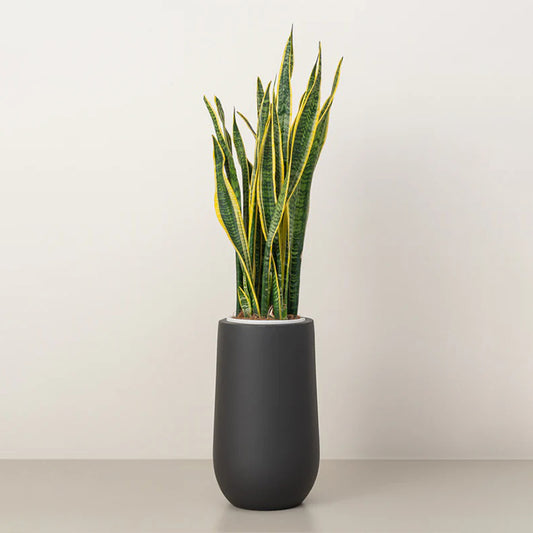
Then think honestly about care. This is where many offices overestimate themselves. If nobody is assigned to water, trim, and rotate plants, low-maintenance options are the smart choice. A hardy snake plant or lucky bamboo will usually perform better in a busy workplace than a more delicate plant that needs frequent monitoring.
Start with light, not style
Light tells you what is possible. Everything else comes after that. If your office gets several hours of bright indirect light, you can choose from easy staples and a few more decorative statement plants. If it is dim for most of the day, your best results will come from plants that can tolerate lower light and irregular attention.
Bright, indirect light works well for plants that want steady brightness without harsh afternoon sun. This is where many popular indoor plants thrive. Lower-light areas are better for forgiving plants with slower growth habits. Direct sun from a hot window can also be a problem, especially in warmer climates, because leaves may scorch if the plant is too close to the glass.
If you're not sure what kind of light you have, watch the space for one full workday. A plant corner that looks bright at noon may be fairly dark by 2 p.m. That small detail matters. Choosing based on actual light patterns is far more reliable than guessing from the size of the window.
Best plant types for common office light conditions
For low-light desks and interior rooms, snake plants and lucky bamboo are often the safest choices. They stay tidy, adapt well, and do not demand constant care. For medium to bright indirect light, pothos, peace lilies, and some compact foliage plants can do well while adding fuller texture. For brighter offices where you want more visual impact, monstera or bird of paradise can create a stronger design statement, but they need more room and better light to keep that fresh, healthy look.
This is where trade-offs matter. A dramatic plant can elevate a room fast, but it may not be the best fit for an office that runs cold air all day and gets inconsistent care. A simpler plant may not get as many compliments on day one, but it often looks better six months later.
Match the plant to the role it needs to play
Office plants do different jobs. Some are there to soften a sterile space. Some create privacy between desks. Others add a polished first impression in a waiting area or reception zone. When you know the job, it is easier to choose the right size and shape.
For desks, compact plants are usually the best fit. You want something that adds life without blocking screens, paperwork, or conversation. Upright plants with a small footprint work especially well here. On shelves or cabinets, trailing or slightly fuller plants can add movement and break up straight office lines.
For entrances and corners, larger plants help anchor the space. This is where statement plants make sense if the light supports them. In conference rooms, keep the scale moderate. Plants should warm up the room, not distract from the meeting or crowd the table.
There is also the question of cleanliness. In offices, neat growth habits often win. Plants that drop leaves frequently, grow too fast, or need regular shaping may create more work than they are worth. A cleaner, slower-growing option is usually the better business choice.
Think about maintenance before you buy
A plant is only low maintenance if it matches the people caring for it. That sounds obvious, but it saves money and frustration. Some offices have a dedicated person who enjoys plant care. Others water everything at random on Friday afternoon. Those are two very different environments.
If care will be occasional, choose plants that prefer drying out a bit between waterings. Overwatering is one of the most common office plant problems, especially when several people assume the plant looks thirsty and all water it in the same week. Hardy plants tend to forgive this better than sensitive ones, but even tough plants struggle in constantly soggy soil.
Pot choice matters too. A decorative planter looks great, but the setup should still support healthy roots. Plants generally do better when excess water can drain properly. The right soil also makes daily care easier because it helps roots stay balanced rather than wet for too long.
This is one reason many shoppers prefer buying from a store that offers plants along with pots, soils, and practical care accessories. It removes the guesswork and helps the plant settle into office life with fewer problems from the start.
Size matters more than most people think
A common mistake is buying a plant that is too large for the current space or too small for the visual impact you want. In offices, scale affects both style and care. A very large plant can be stunning, but it may also be harder to move for cleaning, rotation, or better light. A tiny plant may disappear in a large lobby and fail to create the effect you had in mind.
It helps to think in layers. Small plants fit desks and side tables. Medium plants work well on cabinets, corners, and shared areas. Larger floor plants belong in places where they have enough breathing room to look intentional rather than squeezed in.
Growth rate matters as well. Some plants stay manageable for a long time, while others quickly outgrow their spot. If you want a long-term fit with minimal reshuffling, choose slower growers or start with a size that leaves room for the plant to mature.
Choose plants that suit the office culture
The best office plant is not always the trendiest one. It is the one that feels right for the workplace. A sleek, modern office may suit architectural plants with clean lines. A more relaxed creative space might look better with fuller foliage and a softer mix of textures.
There are practical culture questions too. Is the office pet-friendly? Do people have allergies or sensitivities to fragrance? Is there heavy air conditioning, frequent travel, or long holiday closures? These details can shape your plant choice just as much as design preference.
For busy teams, resilient plants usually create the best experience. They keep the office looking fresh without demanding too much attention. If the goal is to make the workspace more welcoming, consistency matters more than perfection. A healthy easy-care plant will always outperform a high-maintenance plant that looks stressed after two weeks.
When to keep it simple
If you are choosing plants for the first time, start with one or two proven options instead of filling the whole office at once. This gives you time to see how the space behaves and how well the plants settle in. Once you know what works, expanding is much easier.
A practical starting mix often includes a dependable desk plant, one medium accent plant, and a larger floor plant only if the light truly supports it. That creates variety without making care too complicated. For many offices, simple wins.
If you are shopping in a hot climate like Dubai, it is also worth being careful about delivery timing and the transition from outdoor heat to indoor air conditioning. Quality plants and fast, reliable delivery make a real difference here, because healthy plants adapt better from day one.
The best office plants do not ask you to become a plant expert overnight. They just need a good match. Choose for light, space, and routine first, and the style part becomes much easier. A plant that fits your office well will quietly do its job every day - making the room feel calmer, more polished, and a lot more alive.