
12 Best Plants for Office Desks
That sad corner between your monitor and coffee mug can do a lot more than hold paper clips. The best plants for office desks add color, soften a work-heavy setup, and make the whole space feel less sterile without turning plant care into another task on your to-do list.
A good desk plant has to earn its spot. It should stay compact, tolerate indoor conditions, and handle the reality of office life - air conditioning, missed waterings, and lighting that is usually far from ideal. The right choice depends on how much light your desk gets, how often you remember to water, and whether you want something subtle or a plant that actually gets noticed on video calls.
What makes the best plants for office desks?
Desk plants live under very different conditions than living room plants. They are often placed under fluorescent lights, near vents, or several feet from a window. That is why the best options are usually low-maintenance indoor plants with predictable growth habits.
Size matters first. A plant that looks cute in a nursery pot can quickly outgrow a small desk if it spreads too wide or gets leggy in low light. The best desk plants stay neat, or at least grow slowly enough that they will not take over your keyboard tray in a month.
Care needs matter just as much. If you work long hours, travel, or simply do not want to monitor soil moisture every other day, choose plants that forgive inconsistent care. On the other hand, if your desk sits near a bright window and you enjoy tending plants, you can go for something a little more expressive.
12 best plants for office desks
1. Snake plant
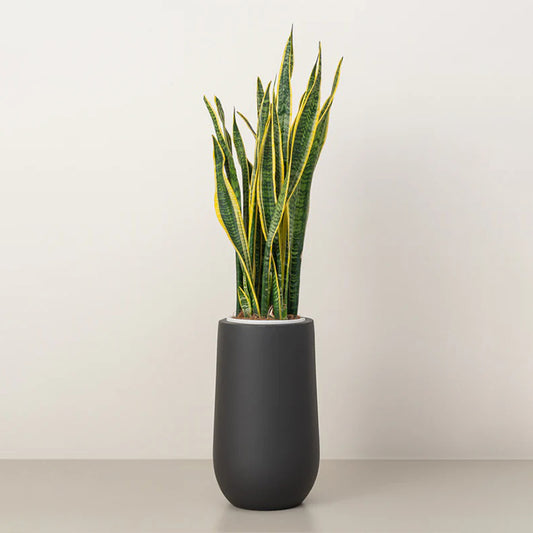
Snake plant is one of the easiest wins for an office desk. It handles low light better than most houseplants, tolerates dry indoor air, and does not mind if you forget to water it now and then. Its upright leaves also make it a smart choice for tight spaces because it adds height without taking up much width.
If your desk is very small, go for a compact variety instead of a full-sized plant. Snake plants prefer to dry out between waterings, so overwatering is the bigger risk than underwatering.
2. Lucky bamboo
Lucky bamboo works especially well if you want a clean, simple look. It is commonly grown in water, which means less mess around paperwork and electronics, and it fits neatly into modern office setups.
It does best in bright, indirect light, but it can adapt to lower light conditions. The trade-off is that growth may slow down. Keep the water fresh and avoid direct sun, which can scorch the stalks.
3. Pothos
Pothos is a favorite for good reason. It is forgiving, grows well indoors, and brings a fuller, trailing shape to a desk. If you have a shelf above your workspace or room for a small planter at the desk edge, pothos can soften the whole area beautifully.
For very compact desks, trim it regularly so it stays tidy. It tolerates lower light, though brighter indirect light usually keeps the leaves fuller and more vibrant.
4. ZZ plant
If your office lighting is poor and your watering routine is unpredictable, ZZ plant is hard to beat. Its glossy leaves look polished with almost no effort, which makes it ideal for professional spaces where you want greenery that still feels sleek.
The one thing to watch is water. ZZ plants store moisture in their rhizomes, so they would rather be left a little dry than kept constantly wet.
5. Peace lily
Peace lily is a strong choice if you want a desk plant that feels a little more decorative. Its deep green leaves look elegant year-round, and under the right conditions it can produce white blooms that brighten up a workspace.
It needs more attention than a snake plant or ZZ plant. If the soil gets too dry, it tends to droop dramatically. The upside is that it usually perks back up quickly after watering, so it is fairly communicative even for beginners.
6. Mini monstera or young monstera
A young monstera can work well on a larger desk, especially if your space gets bright indirect light. It gives you that bold tropical look without immediately demanding floor space.
This is one of those it-depends options. If you want a plant that stays tiny forever, monstera is not it. But if you are happy to size up later or move it to a side table, it can be a great starter desk plant with strong visual impact.
7. Succulents
Succulents are often recommended for desks because they stay compact and come in a wide range of shapes and colors. They suit minimal setups and are easy to style in small pots.
The catch is light. Many people think succulents thrive anywhere because they need little water, but on a dim desk they often stretch and lose their shape. They are best for desks close to sunny windows, not windowless cubicles.
8. Cactus
Cacti have the same main advantage as succulents - small footprint, low watering needs, and lots of personality. They can make a desk feel a little more playful without looking cluttered.
Again, bright light is non-negotiable for long-term success. If your workspace gets direct sun for several hours, a small cactus can be a great fit. If not, choose something more adaptable.
9. Aglaonema
Aglaonema, also called Chinese evergreen, is an underrated desk plant. It handles indoor conditions well and often has patterned leaves that add more interest than plain green foliage.
It is a good middle ground between ultra-basic and high-maintenance. It can tolerate lower light, but the more colorful varieties usually look better with brighter indirect light.
10. Philodendron
Compact philodendron varieties are excellent for desks because they are easygoing and attractive. Heartleaf philodendron, in particular, works much like pothos, with trailing vines and a soft, relaxed look.
If you like greenery that feels lush but not fussy, this is a reliable pick. Just give it moderate watering and trim it back when needed.
11. Spider plant
Spider plants bring movement and texture to a workspace with their arching leaves. They are adaptable, fast-growing, and forgiving, which makes them a nice option for beginners.
The only downside for desk use is spread. A mature spider plant can get wider than expected, so it is best on a larger desk or corner workstation rather than a tiny shared surface.
12. Fittonia
Fittonia, or nerve plant, is ideal if you want something small and colorful. Its veined leaves add detail without taking up much room, and it looks especially good in stylish ceramic pots.
It does want more humidity and more consistent moisture than tougher desk plants. That means it is better for plant owners who enjoy a little routine rather than those looking for a near-zero-care option.
How to choose the best office desk plant for your setup
Start with light, not looks. A plant that matches your decor but struggles all week is not a good buy. If your desk is far from a window, stick to proven low-light performers like snake plant, ZZ plant, pothos, or aglaonema. If you have bright indirect light, your options open up to peace lilies, philodendrons, and young monsteras.
Then think honestly about your schedule. If you often work late, travel, or just want something easy, choose plants that can tolerate missed watering. If you enjoy checking on your plant and do not mind a little maintenance, you can pick something more delicate.
Finally, consider desk size and style. Upright plants work better in narrow spaces. Trailing plants need room to spill. A sleek office usually suits structured plants like snake plant or lucky bamboo, while creative or casual spaces can carry fuller plants like pothos or philodendron.
Simple care tips for desk plants
Most office desk plants fail for one of two reasons: too much water or the wrong light. Watering on a fixed schedule sounds organized, but plants do better when you check the soil first. If the top layer is still damp, wait.
Choose pots with drainage whenever possible, especially for plants like snake plant, ZZ plant, and succulents. If you are using a decorative planter, make sure excess water does not sit at the bottom. That small detail makes a big difference.
Dust the leaves now and then. Office plants collect dust faster than people expect, and a quick wipe keeps them looking fresh. It also helps the plant use available light more effectively.
If your workspace runs very cold from air conditioning, keep sensitive plants away from direct drafts. Even easy-care varieties prefer stable conditions over blasts of cold or hot air.
Best plants for office desks if you want the easiest option
If you want the shortest shortlist, go with snake plant, ZZ plant, pothos, or lucky bamboo. These four cover most office conditions and suit most plant owners, especially beginners. They also look polished enough for professional desks without demanding much in return.
For shoppers who want convenience as much as greenery, it helps to buy from a source that also offers the right pots, soil, and care basics in one place. That is part of what makes building a better workspace feel easy instead of complicated.
A desk plant does not need to be rare or expensive to change the mood of your workday. Pick one that fits your light, your schedule, and your space, and that little patch of green will start pulling more weight than you expect.